Security for Medical Offices and Clinics in Coral Gables & Kendall: Protecting Staff, Patients and Records
A medical office is not like any other workplace. On a normal Tuesday in a clinic in Coral Gables or Kendall, the front desk may be handling a patient in pain, a relative who has been waiting too long, a delivery of medications, a pharmaceutical rep, a vendor who wants to "just drop something off in the back" and a phone that never stops ringing. Most of the time all of that goes smoothly. But when it doesn't, the people who end up managing the problem are usually the receptionists, the medical assistants and the nurses, who were hired to care for patients, not to stand guard.
Professional security exists to take that weight off the clinical team. Done well, it is almost invisible to patients: a friendly, uniformed officer who greets people, knows who belongs where and is ready to step in early when tension rises. This guide explains the specific risks medical offices face, what a good security program looks like in a healthcare setting and how to build one that fits your hours, your layout and your budget.
- ✔ Clinics face a unique mix of risks: emotional visitors, medications and equipment on site, private records and staff leaving late.
- ✔ In healthcare, the best security officer is calm, courteous and trained to de-escalate, not intimidating.
- ✔ Access control to treatment rooms, medication storage and records areas matters as much as watching the front door.
- ✔ After-hours patrols and opening/closing rounds protect the building when nobody is inside.
- ✔ Officers support your privacy policies; they do not need, and should not have, access to patient information.
Why medical offices need a different approach
Coral Gables has a dense concentration of medical office buildings, specialty practices and outpatient centers along its main corridors, and Kendall is home to a large number of family practices, urgent care centers, dental offices, imaging centers and physical therapy clinics serving neighborhoods across southwest Miami-Dade. Many of them share the same characteristics that make security in healthcare different from security in a typical office.
A security plan for a clinic has to address all four at once, without turning a place of care into something that feels like a checkpoint.

The most common security problems in clinics
When we talk with practice managers and medical office building managers, the same situations come up again and again:
- Escalating conflicts at the front desk. A billing dispute, a missed appointment or a long wait turns into raised voices, and staff have no one to call except the police.
- People wandering into staff-only areas. A visitor looking for a restroom, a former patient or someone with no business there walks past reception and into the hallway behind it.
- Theft of property. Purses in break rooms, laptops on unattended workstations and supplies in unlocked storage rooms disappear more often than most offices admit.
- Medication and sample security. Any place that stores medications needs to know who goes near them and when.
- After-hours break-ins and vandalism at ground-floor suites, especially in standalone buildings and strip centers.
- Staff safety in the parking lot at the beginning and end of the day, when people are alone and carrying bags.
- Loitering in lobbies, stairwells and covered entrances, which makes patients uncomfortable and creates liability for the property.
What good healthcare security looks like
The goal is not to build a fortress. It is to make the clinic feel organized and safe for everyone who walks in. In practice, that comes down to a few core functions:
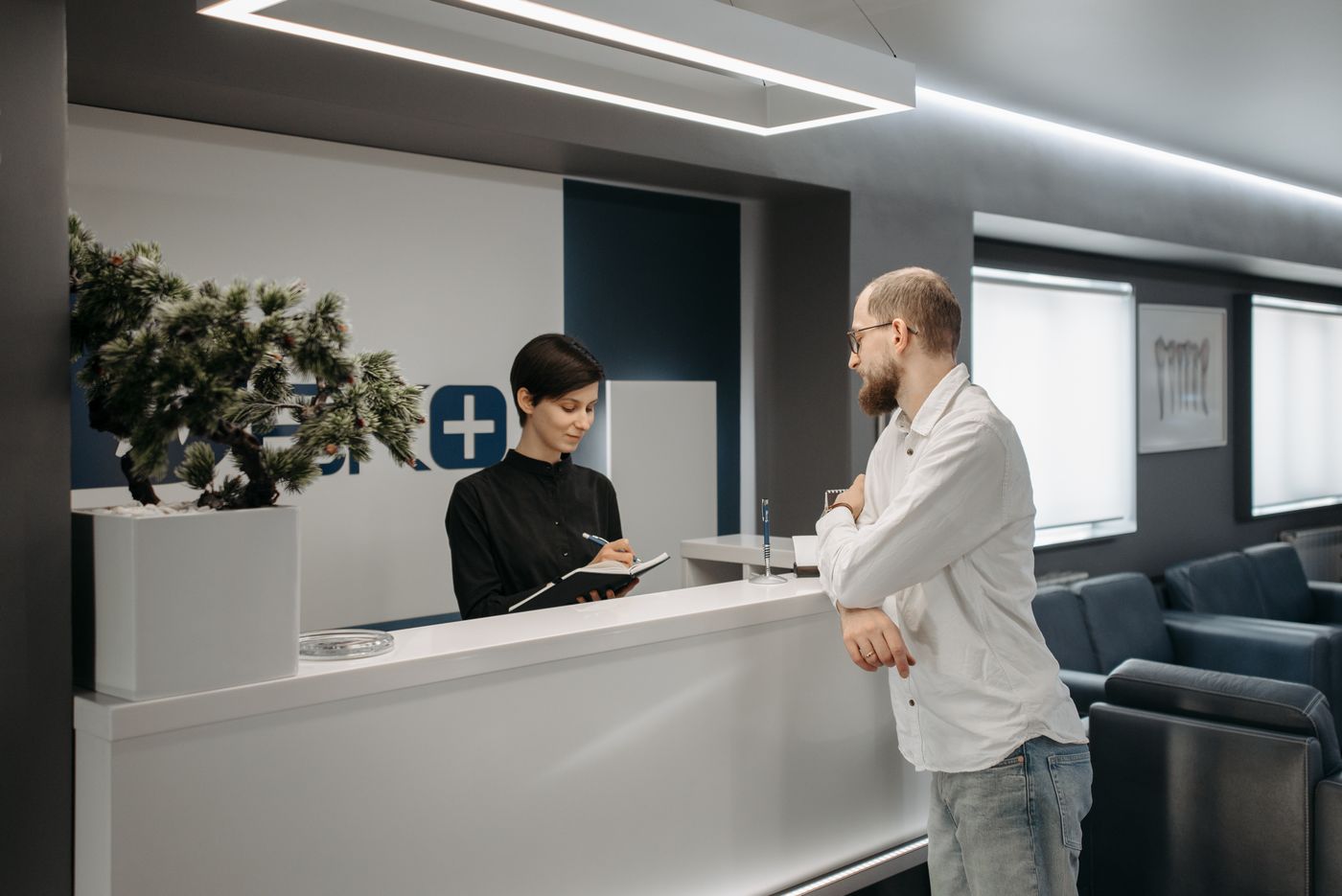
- A welcoming presence at the entrance. The officer greets patients, helps with directions and keeps an eye on who comes in. For most patients, that is the only interaction they will ever have with security.
- De-escalation first. Officers are trained to recognize rising tension and calm it with words, space and patience long before it becomes a confrontation. When police are needed, they call them and stay on scene to assist and report.
- Access control. Treatment areas, medication storage, records rooms, IT closets and loading doors should be off-limits to visitors. Officers check that doors that should be locked stay locked and that vendors and contractors are signed in.
- Opening and closing rounds. Before staff arrive and after the last patient leaves, an officer checks doors, windows, lights and alarms, and confirms nobody remains inside who should not be there.
- Staff escorts. Walking employees to their cars at the end of a late shift is one of the simplest, most appreciated services in any medical setting.
- Clear daily reporting. Every incident, every unusual event and every round is recorded so management knows what is happening at the property, even on days they are not there.
Privacy: what officers should and should not do
Medical offices operate under strict privacy obligations, and security has to fit within them. A professional officer in a healthcare setting follows the clinic's own policies on confidentiality. In practice, that means officers do not read charts or screens, do not discuss patients with anyone, keep incident reports factual and limited to what security needs to document, and route any question about patient information to clinic staff. If your practice has specific requirements, put them in the post orders so every officer assigned to the site follows the same rules. For questions about your legal obligations, your compliance officer or attorney is the right person to ask.
Building the right plan for your clinic
There is no single model that fits every practice. A two-provider dermatology office in a Coral Gables medical building has very different needs from a busy urgent care center in Kendall that is open late seven days a week. Here is how we usually approach it:
On-site officer or mobile patrols?
Many clinics do not need an officer standing in the lobby all day. Others cannot do without one. This comparison helps frame the decision:
A common combination is an officer during the busiest hours plus mobile patrols at night and on weekends. Our patrol vehicles are tracked with GPS and our DTR Patrol and Geo Fence technology lets property managers confirm that every scheduled check actually took place.
Quick checklist for practice managers
- Is there a clear line between the public area and staff-only areas, with doors that actually lock?
- Do staff know exactly what to do, and who to call, when a visitor becomes aggressive?
- Are medication storage and sample cabinets locked, and is access limited and recorded?
- Is the parking lot well lit, and does anyone walk with staff who leave after dark?
- Are cameras covering the entrance, the reception desk and the back door, and does someone check that they record?
- Does someone check the building at closing to confirm that every door is locked and nobody is left inside?
Frequently asked questions
Will a security officer make patients nervous?
Not when the officer is chosen and briefed for a healthcare setting. Most patients find a courteous, uniformed officer at the entrance reassuring, especially parents with children and older patients. The tone is set by the post orders and the officer's attitude, and that is something we define with you before the first shift.
Are your officers licensed?
Yes. Security officers in Florida must hold a Class "D" license issued by the Florida Department of Agriculture and Consumer Services, Division of Licensing, and security agencies must hold a Class "B" agency license. For a clinic, unarmed officers are the usual choice.
Can you cover only certain hours or days?
Yes. Coverage can be built around peak hours, late appointments, weekend clinics or after-hours patrols only. The schedule follows your operating hours, not a fixed package.
Do you serve medical offices outside Coral Gables and Kendall?
Yes. We work across Miami-Dade, including Dadeland, Pinecrest, Brickell and Downtown Miami, and in the Tampa Bay area through our Tampa office.
The bottom line
Clinics run on trust. Patients need to feel safe walking in, and staff need to know that someone has their back when a situation turns difficult. A security officer who is calm, well-trained and respectful of privacy, supported by patrols and clear reporting, lets your team do what it does best: take care of people. With nearly two decades protecting South Florida properties, All American Security Services can help you design coverage that fits the way your practice actually works.
How to Choose a Security Company in Tampa & Clearwater: Licenses, Insurance and the Questions to Ask