Parking Lot & Garage Security in Hialeah & Downtown Miami: How to Protect Cars, Customers and Staff

Mijael • February 17, 2026

For most businesses, the parking area is the first thing a customer sees on arrival and the last thing an employee sees at the end of a long shift. It is also where many property incidents begin. Car break-ins, catalytic converter theft, vandalism, people sleeping in stairwells and arguments over parking spaces rarely happen inside the store or the office. They happen outside, in the lot or the garage, often after dark.

In Hialeah, busy shopping plazas, medical buildings and industrial properties share space with heavy traffic all day. In Downtown Miami and Brickell, multi-level garages serve offices, residential towers and restaurants around the clock. The settings are different, but the question for property managers and business owners is the same: how do you keep the parking area from becoming the weak spot of the whole property? This guide covers the most common problems, how to choose a patrol method, a quick self-assessment you can do tonight and what good reporting looks like.

Key takeaways
  • ✔ Parking areas need their own security plan: they are large, open to the public and often busiest when staff is thin.
  • ✔ Open lots and garages have different weak points. Lots have long edges and dark rows; garages have stairwells, elevators and blind ramps.
  • ✔ Foot, golf cart and vehicle patrols each fit different properties. Irregular timing is what keeps any patrol effective.
  • ✔ Lighting, sightlines, signage and working cameras make officers more effective, and officers should report when any of them fail.
  • ✔ Towing and parking enforcement have specific rules in Florida. Set your policy with your attorney before officers enforce anything.

Four jobs every parking patrol should do

Our motto sums up what officers in a lot or garage are there to do. It is a useful way to judge any parking security program, including ours:

Observe
Notice people, vehicles and conditions that do not fit
Deter
Make the property a visibly harder target
Record
Document rounds, incidents and hazards with time and location
Report
Get the right information to the right person quickly

A patrol that only drives through without recording anything provides some deterrence but leaves you with no information. A patrol that writes long reports but is never seen does not deter. The value is in doing all four, every shift.

Open-air lot or parking garage?

The two most common parking settings create very different challenges. Understanding them helps you decide where officers should spend their time.
Open-air lot Parking garage
Main weak points Long perimeters, far rows, poorly lit corners, cart corrals and dumpster areas. Stairwells, elevator lobbies, ramps, upper levels and pedestrian doors.
Typical issues Vehicle break-ins, catalytic converter theft, loitering, after-hours dumping. Break-ins on quiet levels, people sheltering in stairwells, graffiti, tailgating at gates.
Visibility Usually good by day; depends heavily on lighting at night. Limited by columns, ramps and low ceilings, day and night.
Best patrol method Vehicle or golf cart patrols that cover the full area, plus foot checks of corners. Foot patrols of stairwells and levels, combined with checks of gates and pay stations.
Key infrastructure Light poles, perimeter fencing, signage, cameras at entrances. Lighting on every level, working gates, cameras at stairwells and elevators, emergency phones if present.
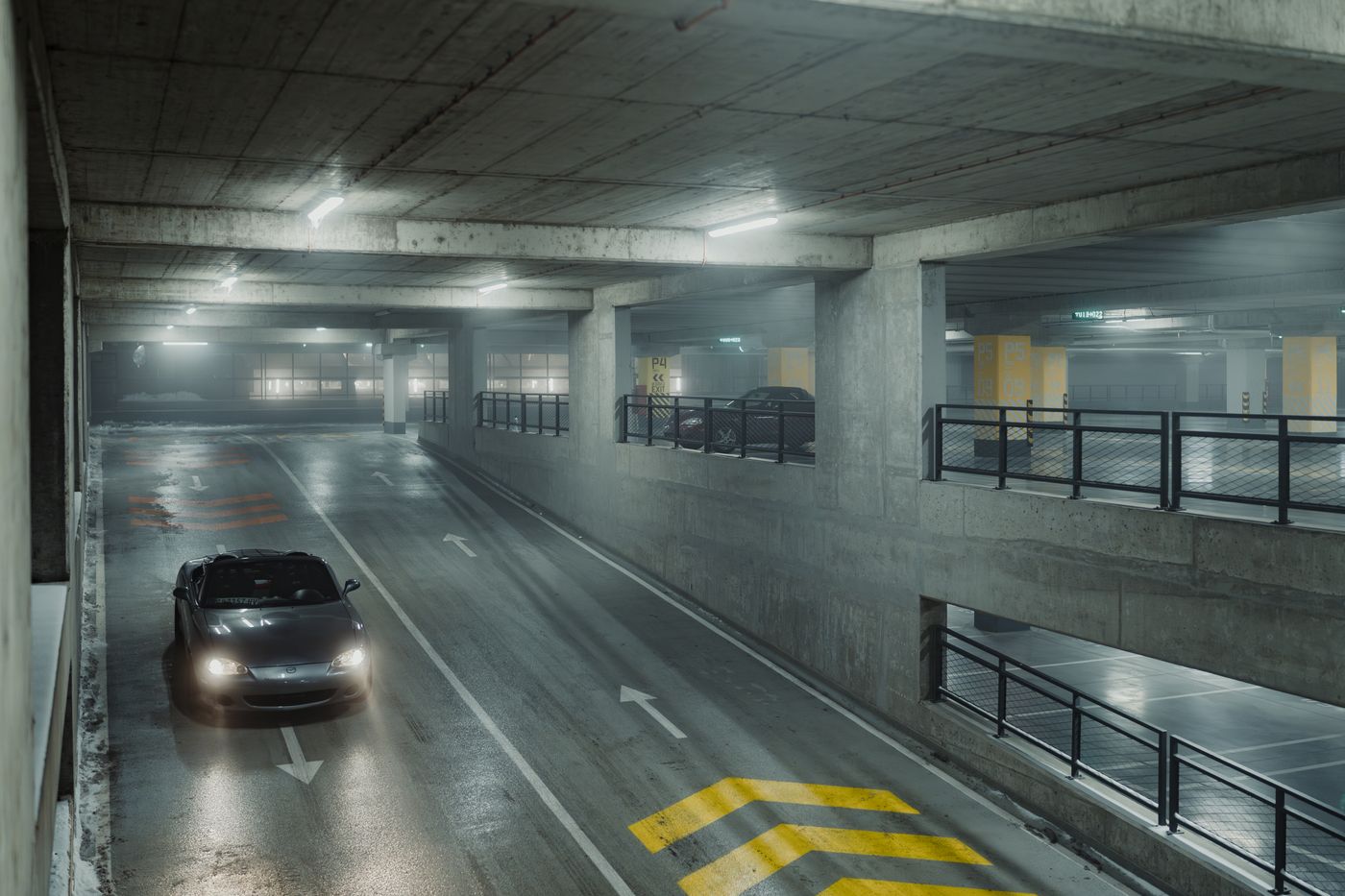
Car driving through the ramp of a multi-level parking garage
Garage ramps and upper levels are quieter and harder to see from the street. Regular foot rounds and good lighting on every level keep them from becoming blind spots.

The most common parking area problems

Every property is different, but these are the issues we hear about most often from property managers and business owners across Miami-Dade:

🚗
Vehicle break-ins
Bags, laptops and packages left in plain sight make cars an easy target, especially in far rows and quiet garage levels.
🔧
Catalytic converter theft
Thieves target vehicles parked for long periods, often in poorly lit corners or along fences.
🛌
Loitering and sheltering
Stairwells, garage corners and covered areas can attract people sleeping or gathering after hours.
🅿️
Unauthorized parking
Non-customers take spaces meant for tenants, patients or shoppers, creating daily friction.
🎨
Vandalism and graffiti
Damage to walls, signs, gates and pay stations that is expensive to repeat if nobody is watching.
🌙
Staff safety at closing
Employees leaving alone late at night are understandably uneasy walking to their cars.

Choosing the right patrol method

How officers move through the property matters as much as how often they patrol. Most properties use a combination:

  • Foot patrols are best for garages, stairwells, elevator lobbies and areas close to building entrances. They allow officers to check doors, talk to people and notice details.
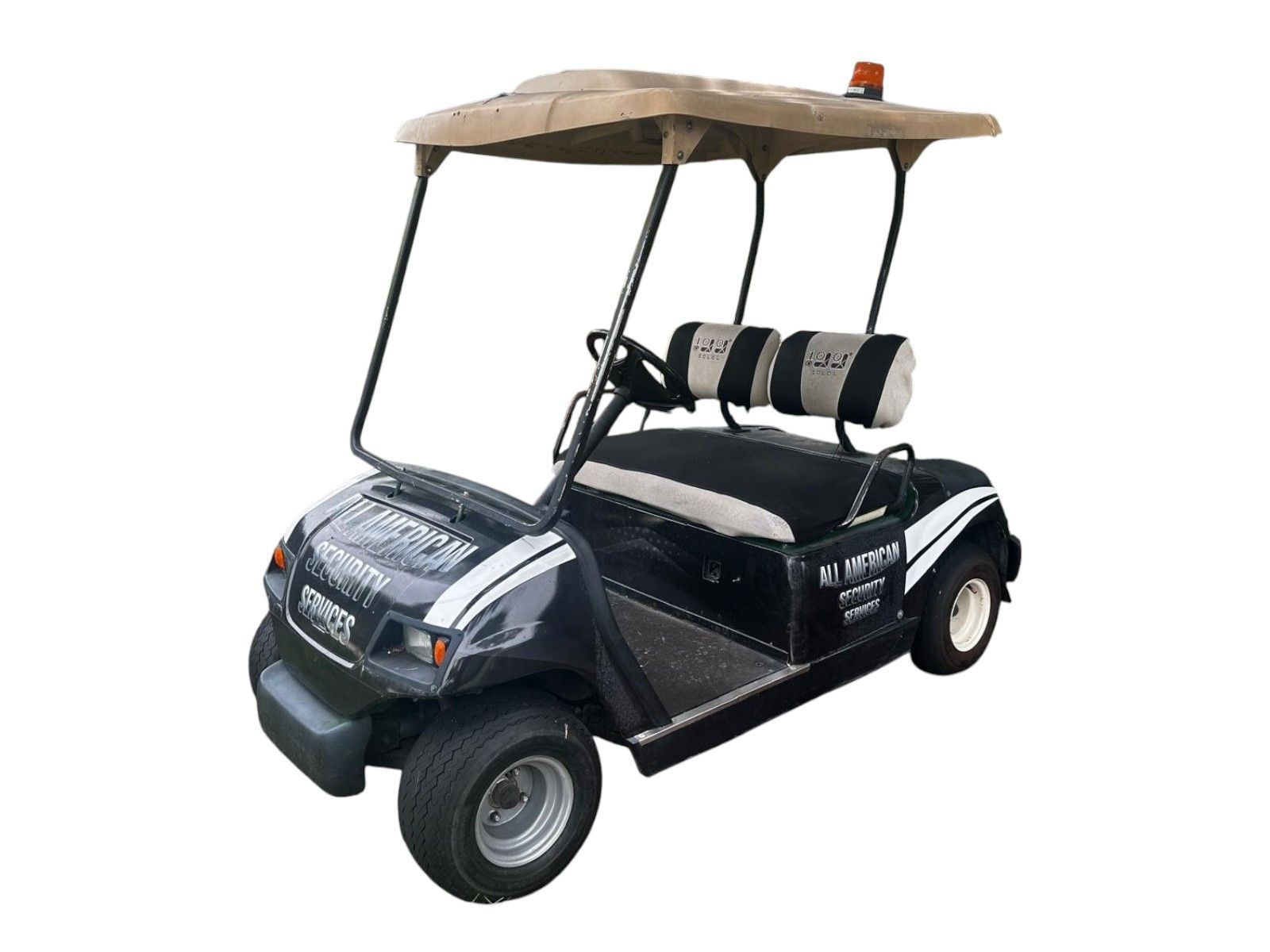
  • Golf cart patrols cover large lots and campuses faster than walking, while keeping the officer approachable and visible to customers and staff.
  • Marked vehicle patrols are a strong visual deterrent and work well for perimeter checks, large commercial properties and mobile patrol routes that cover several sites in one shift.

Whatever the method, timing is what keeps it effective. Rounds that happen at exactly the same time every hour are easy to predict. Varying the route and timing, while still covering every area, keeps anyone watching the lot guessing.
All American Security Services patrol golf cart
One of our patrol golf carts. On large lots and campuses, a golf cart lets officers cover more ground than on foot while staying visible and easy to approach.

A 30-minute walk-through you can do tonight

You do not need to be a security expert to spot the weak points of your parking area. Pick an evening after dark and walk the property as if you were seeing it for the first time:

1
Drive in like a visitor
Enter through each entrance. Is it clear where to go? Are entrance signs visible and readable at night? Do gates and barriers work?
2
Check every light
Walk every row and every garage level. Note dead or flickering lights and areas where you cannot see the far end of the row.
3
Look at sightlines
Overgrown hedges, stacked materials, dumpsters and columns can create hiding spots. Note anything that blocks the view from the building or the street.
4
Test the stairwells and doors
Do stairwell and pedestrian doors close and latch? Are they propped open? Is there trash or signs of people sheltering?
5
Review signage and cameras
Are the property rules posted clearly? Do cameras cover the entrances, exits and pedestrian areas, and are they actually recording?
6
Walk the employee route
Follow the path staff take at closing. Would you feel comfortable walking it alone at that hour?

Write down what you find. That list becomes the starting point for a conversation with your security provider and your maintenance team.
Aerial view of a parking lot at night under street lights
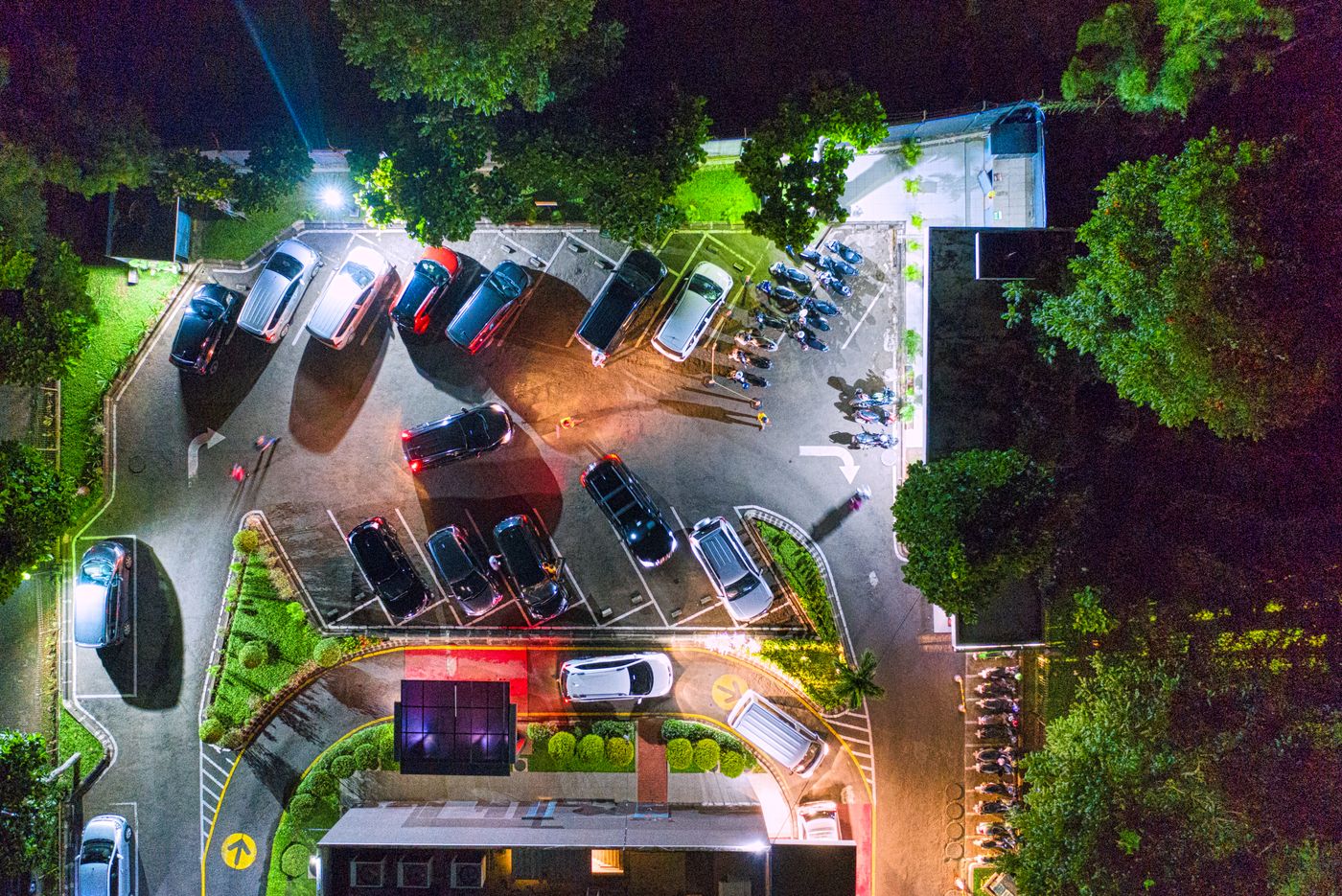
From above, it is easy to see which rows are well lit and which ones fall into shadow. Those darker edges deserve extra attention on every round.
⚖️
Towing and parking enforcement: check the rules first
Florida has specific requirements for towing vehicles from private property, including signage, and some cities add their own rules. Before officers enforce parking rules or call for a tow, set a written policy with your attorney and confirm the local requirements with your municipality. Our officers document violations and follow the policy you establish; they do not improvise enforcement.

A safer closing routine for staff

For many businesses, the moment of greatest concern is not the busiest hour but the last one. A simple closing routine makes a difference:

  1. Leave together when possible. Staff walking out in pairs or groups are less exposed than one person alone.
  2. Offer escorts. An officer can walk employees, and customers who ask, to their vehicles.
  3. Park staff in well-lit areas. Reserve spaces close to the entrance and under lights for employees who close.
  4. Check the lot before opening the doors. A quick round before staff leave confirms nothing unusual is waiting outside.
  5. Report concerns the same night. If employees notice something, they should tell the officer or manager right away so it goes into the report.

Reports that help you fix the property

A good parking patrol report is a maintenance tool as much as a security one. Each shift should record rounds completed, incidents with time and location, vehicles of concern, and hazards like dead lights, broken gates, damaged cameras or spills. At All American Security Services, our patrols use DTR Patrol reporting with GPS tracking and Geo Fence technology, so you can see where and when rounds took place. Learn more on our technology page. With nearly two decades protecting properties in South Florida and the Tampa Bay area, we have seen how often a simple, consistent report is what gets a dark corner fixed.

Frequently asked questions

How often should officers patrol a parking lot?

It depends on the size of the property, its hours and the issues you are facing. What matters most is that rounds cover every area and happen at irregular times. A site walk is the best way to set the right frequency.

Can one officer cover several properties?

Yes. Mobile patrols can visit several lots or garages in the same area during a shift, which works well for owners with multiple properties or sites that need coverage only at specific hours.

Do officers need to be armed for parking patrols?

Most parking areas are well served by unarmed officers focused on visibility and documentation. Armed coverage requires a Class G statewide firearm license, additional training, a clear use-of-force policy and a conversation with your insurer, so it should be a deliberate decision rather than a default.

Which areas do you serve?

We patrol parking lots and garages across Miami-Dade, including Hialeah, Downtown Miami, Brickell, Coral Gables and Kendall, and in the Tampa Bay area through our Tampa office, including Tampa and Clearwater.

The bottom line

Your parking area shapes how customers, tenants and employees feel about your property before they even walk through the door. A plan that combines the right patrol method, irregular rounds, good lighting and sightlines, a clear enforcement policy and reliable reports turns the parking lot from a weak spot into a well-watched space. Learn more about our patrol and parking lot security services.
Turn your parking area into a well-watched space
Licensed Florida security officers, marked patrol vehicles with GPS tracking, and daily reports you can actually read. Call Miami or Tampa for a free, no-obligation security assessment.
📞 Miami: (305) 614-9260 📞 Tampa: (813) 590-0771 Request a free quote →
Observe · Deter · Record · Report — Serving South Florida and the Tampa Bay area
By Mijael • October 20, 2026
No todas las empresas de seguridad son iguales, y la oferta más barata casi nunca es la mejor. Una lista práctica para administradores, dueños de negocios y juntas de propietarios de Tampa Bay: licencias de Florida, seguros, supervisión, reportes y las preguntas para hacer antes de firmar.
By Mijael • October 20, 2026
Not all security companies are the same, and the lowest bid is rarely the best value. A practical checklist for Tampa Bay property managers, business owners and HOA boards: Florida licenses, insurance, supervision, reporting and the questions to ask before you sign.
By Mijael • September 15, 2026
La buena seguridad no es solo estar presente, es poder demostrar qué pasó. Cómo funciona nuestro método de cuatro pasos en cada turno, y cómo los reportes de DTR Patrol, el rastreo GPS y las alertas de Geo Fence convierten las rondas en registros que los administradores pueden usar.
By Mijael • September 15, 2026
Good security is not only being there, it is being able to show what happened. How our four-step method works on every shift, and how DTR Patrol reporting, GPS tracking and Geo Fence alerts turn patrols into records property managers can use.
By Mijael • August 18, 2026
Un nuevo año escolar trae familias nuevas, personal nuevo y filas de llegada llenas. Una guía práctica para directivos de colegios privados: control de visitas, entrada y salida, eventos fuera de horario y cómo encajan los oficiales en el plan de seguridad del colegio.
By Mijael • August 18, 2026
A new school year brings new families, new staff and crowded drop-off lines. A practical guide for private school leaders: visitor control, arrival and dismissal, after-hours events, and how trained officers fit into the school's own safety plan.
By Mijael • July 21, 2026
Un concesionario deja afuera de noche más valor que casi cualquier otro negocio. Qué buscan los ladrones en un lote de autos, cómo los disuaden los oficiales y las patrullas nocturnas, y cómo armar un plan que deje un registro claro cada mañana.
By Mijael • July 21, 2026
A dealership leaves more value outdoors overnight than almost any other business. What thieves go after on auto lots, how overnight officers and patrols deter them, and how to build a night plan that leaves a clear record every morning.
By Mijael • June 16, 2026
¿Te vas en el verano? Una casa vacía da señales fáciles de leer. Qué revisan las patrullas de vacaciones, cómo te reportan y una lista práctica para dueños de casa y HOAs en Pinecrest, Palmetto Bay y Coconut Grove antes de salir de viaje.
By Mijael • June 16, 2026
Leaving for the summer? An empty house sends signals that are easy to read. What vacation-home patrols check, how they report back, and a practical pre-departure checklist for homeowners and HOAs in Pinecrest, Palmetto Bay and Coconut Grove.